Powered By Blogger

Friday, April 20, 2012

How To Open the Nexstar 4 SE


Use a small 'Philips' screwdriver to remove your finder scope. Fig.1


Make sure you mark your screws before removing them using any sort of 'marker' that wouldn't be rubbed off by your fingers.  You would want the same screws to go into the same hole, and the correct tension, hence the 'marker'. Fig. 2


Also, it makes sense to mark all three screws differently.  You can mark all three screws 1, 2, 3.  I 'dot' mine accordingly.  Fig. 3


Then you can proceed to remove all three screws and 2 screws that secures the quick-release 'slider' to the rear housing.  No need to unscrew the screw at the front end of the slider. Fig. 4


Once all the necessary screws are removed and stored safely, slide out the tube and the rear housing apart slowly and carefully not letting the 'inner tube' touch the body of the scope. Use your common sense!

Store and cover the rear cell away safely from arms reach (you do not want it to roll away do you?).
Again carefully not touching anything of the mirror or tube assembly! Fig. 6

Hold the tube with the opening facing 'down' so any dust would just drop away while you use the 'puffer' as I called it. Fig. 7

If your hands are small enough you could use the soft lens brush to brush lightly away on the 'corrector lens'.


Once again be gentle and use very, very light strokes.  Make SURE your brush is CLEAN and free of particles!!

'Stand' the tube like this Fig. 8 so dust would not enter the tube as you work away on the other part of the telescope.

Now we come to the mirror.  The object is that you don't want scratches on the mirror!  So use light strokes for dust particles that seem to 'stick' on the mirror.  Fig. 9

You can use the 'puffer' first to blow away the particles. Fig.10  Whichever way you can alternate between them.  Use the 'puffer' at an angle to the surface whether its the mirror or the front lens you're cleaning, so dust is removed effectively away from the surface.

A word on using the lens brush, brush on the surface as if you're almost touching it. Remember that you want to remove the particles and not 'pressing' them onto the glass while you swipe away.

Fig.11 At times I would also clean the angled-mirror inside from the lens barrel.  The same goes through the rear of the cell where you'd screw the 'T-Adapter' at the back - remembering to hold the rear cell pointing downwards for the dust to fall through.
Give it a soft and gentle sway of left to right motion to let any residue fall away. A gentle 'shake' would also do the job.


NOTE: For an 'un-opened' Nexstar 4SE

NEVER..ever use a vacuum cleaner's hose and suck dirt from the opening of the rear cell!! Fig.12

I've read from a forum that someone did that and guess what? I did it! Foolish me!


By doing so, all the dust or whatever that's at the back of every corner of the rear cell is going to get sucked into the main tube and get stuck to the back of the 'corrector lens', then you're a goner!!  The suction power will multiply through the secondary tube inside the telescope's main tube.  My heart dropped when I saw my corrector lens was full of dust particles stuck on the corrector lens.  That is how I dared to learn to open my one-week new 'baby' and cleaned it.  I wanted to clean it because of a speck of dirt that I saw on the lens.  Of course I managed to find someone who did open his Nexstar 4 SE on YouTube.

Lastly, I didn't post anything on using lens-cleaning liquids here, especially on cleaning the main mirror.  You shouldn't be touching it anyway!
But I did use some alcohol dropped onto a lint-free soft cloth (camera or spectacle cloth) and folded without any nasty crease on it.  Just straight folds.  I 'puffed' the mirror first to make sure I would not scratch it when I wiped it with the cloth.  And that's it!  I just imagined that I was an archeologist dusting away some precious artifact - that's how you should do it.  With greatest care.

I'd like to remind you again that I only cleaned using the the alcohol twice, only after my foolish act and none after that.  Like I mentioned, you've got no business letting your fingers wander near the mirror, all because the focusing screws are behind that mirror.  Never put pressure on the mirror, or any parts inside the tube and rear cell.

The Nexstar 4 SE is known for its 'no collimation needed' assurance. So if any of its assemblies are 'off' by your mishandling, then its back to the dealers for adjustments - minus your warranty and plus whatever costs needed!!

Re-assembling is easy enough.  Just reverse the process, carefully as you go along and lastly screw it back to its mark.  Hope my 'foolish' adventure helps.  'Curiosity Kills the Cat.'  Clear skies!!!

 End note: I did checked with the dealers that sold me the scope about my 'dirt', and they say it's nothing to worry about as it wouldn't have any detrimental effects as far as viewing is concerned.  So no worries!!


My Precious.


The clouds cleared, and there it was.  Fortunately, I've checked the weather - it was good!!


6th February, the end of Chinese New year.


Out came the Moon, home alone and nowhere to go but to marvel at the beautiful face of 
'My Precious'.  All is quiet but the smell of burnt powder from some distant fireworks.

Awesome!


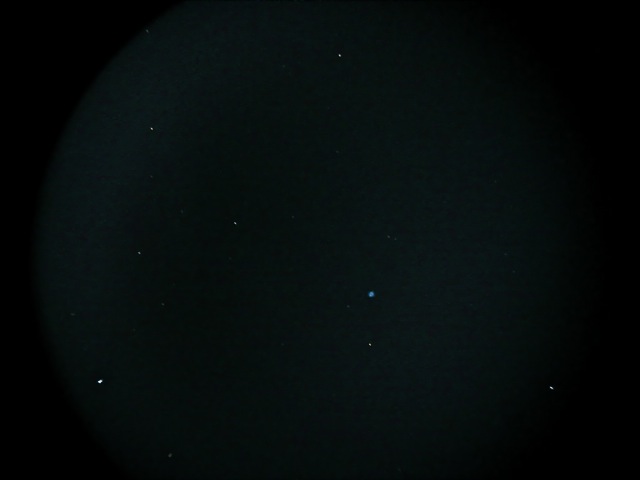
One night I was just stargazing with my new scope, and right at the corner of my vision I 'see' this blueish dot coming in and out of my view.  I trained my scope to the apparent area FOV (field of view) and tried looking to the sides of this object and by the time I did that, my eyes had adjusted to the darkness. And lo and behold!! I saw my first Nebula called the Ghost of Jupiter - or scientifically called NGC 3242.

Ghost of Jupiter
Taken by 4" Nexstar 4SE Schmidt-Cassegrain computerised telescope - Celestron
Neximage USB camera.  This is what I see through the lens. 


This planetary nebula NGC 3242 is most frequently called the Ghost of Jupiter, or Jupiter's Ghost, but it is also sometimes called the Eye Nebula. It can easily be observed with amateur telescopes, and appears bluish-green to most observers. Larger telescopes can distinguish the outer halo as well.[3]


This is what the nebula supposed to look like, taken from a 16" hypergraph telescope.  
Be reminded that mine is only a 4" telescope!


And this is what it looks like taken from Hubble Space Telescope


Moon Craters


Out came the moon and I whipped out the telescope, punched in the coordinates of my locality into the handheld computer and away it went - slewing to the moon!  It was a clear night, so forget about shooting the stars.  The Moon is just too bright.  But look at those craters!!

Thursday, April 19, 2012

Lunar Eclipse 2011

It's starting!

Closeup


Blood moon


2011, the year of the Red Moon.


Planet Hunt!

JUPITER - King of the planets!

First of the four 'Gas Planets'. Shot in October 2011, this giant planet is obvious in the night sky.  It takes 11.86 years to circle the Sun and only need about 10 hours to make one 'earth day'.  Its atmosphere is composed of hydrogen and helium gas and strong east-west winds in the upper atmosphere are responsible for pulling these climatic features into dark and light stripes.  The picture below was taken in November 2011.


Looking through the scope, one can clearly see the four moons revolving around the big planet.  This is my first encounter of Jupiter from my new telescope, what an awesome experience!


January 2012


MARS - The Red planet

I actually spotted this red 'orb' with my naked eye thinking that it was just another 'paper lantern' since it's Chinese New Year in late January.  But no, it's Mars. By 10pm (+8:00 GMT) Mars is already up at 40˚ altitude; and it's easy to spot - it's bright red.  Because of its 'red' looks, it is named after the Roman god of war.

Mars takes around 2 years to orbit the Sun and its 'day' is a little more than 24 hours.


SATURN - The father of Zeus (Jupiter)

Second of the Gas planets and is most popular for its rings.  The same night I located Mars, I tried my chance of locating Saturn also, so I waited till 1 am.  Unfortunately a huge cloud cover dominated the skies. And there was the Moon.

I tried again a week later on February 5th between 12 am and 2 am, Saturn was sighted with its rings tilted at 15˚.  What a sight!  Through my scope lens it looked so clear and bright - looked unreal.  But there it was.

Saturn has no solid surface.  It is surrounded by layers of gas and traces of water. The gases comprises of metallic liquid hydrogen, liquid hydrogen and helium.  A vicious mix!  It orbits around the Sun and on itself right the same as Jupiter's.


And last, but not least....
VENUS - The brightest of them all.


It is sometimes called 'Earth's sister planet' because of their similarities in size, mass and structure.  Though its name suggest a more 'feminine' character but Venus does hide a dark secret underneath its deceiving looks.

Its atmosphere is 90 times greater than Earth's, meaning on its surface, we would be crushed.  Much akin to 1km below the surface of Earth's oceans.  While much of Venus' atmosphere is packed with carbon dioxide and lots of sulfur dioxide on the surface, this makes Venus the hottest planet in the our solar system!  One 'Venusian' day, is 243 (Earth) days - one of the slowest of all planets - and that is why the surface facing the sun is hot like 'hell', as scientists would say. Venus orbits the Sun in about 7 months. 

I call it the 'greenhouse effect' planet.  Venus shine so bright is because of its cloud-based atmosphere like ours and the elements that lurk underneath.  Looking through the telescope, Venus looks pale and featureless, almost serene.  In actual fact, the true colours of this planet are reddish-brown.


Venus photos
Photos of the surface of Venus by Russian and Nasa's lander.  The probes only lasted less than 30 mins then transmission was lost.  It was probably crushed by the Venusian atmospheric pressure and heat. 

Venus and Uranus are the only two planets in our system that have a 'retrograde' orbit round the Sun.  While all the planets turn in a counter-clockwise direction, both these planets turn clockwise.

In all, it was worth it.  It took me 4 months to be able to photograph Venus properly, as of now, its an 'Evening star'.  It was difficult to photograph towards the setting Sun, plus it was always cloudy, being so close to the Equator.

My next goal is to catch Uranus and some asteroids that are wondering in the skies above me, waiting to be 'blogged'!! Lol!!!


When Evening Comes.

When I look out my window on some evenings, this is what I see.


 Kota Kinabalu has one of the best sunset views.


Beauty has its drawbacks too, I wished i would have clear skies often.  But yeah,..these are the conditions you'd get over this side of the world.


                                                                              Sighting 'Jupiter'.

                                                                               22:00 Mars.