Powered By Blogger

Friday, April 20, 2012

Awesome!


One night I was just stargazing with my new scope, and right at the corner of my vision I 'see' this blueish dot coming in and out of my view.  I trained my scope to the apparent area FOV (field of view) and tried looking to the sides of this object and by the time I did that, my eyes had adjusted to the darkness. And lo and behold!! I saw my first Nebula called the Ghost of Jupiter - or scientifically called NGC 3242.
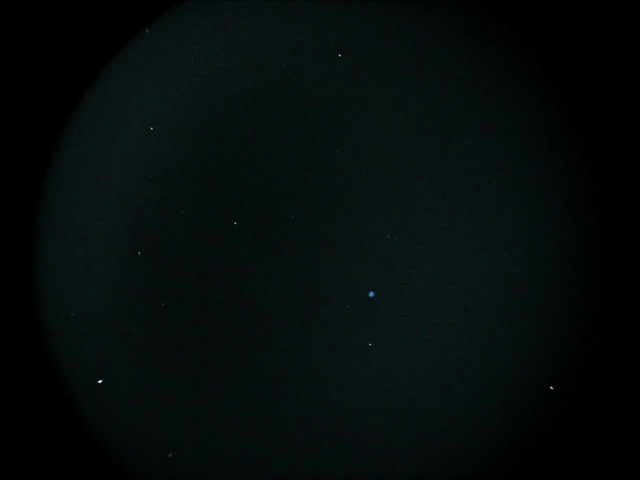
Ghost of Jupiter
Taken by 4" Nexstar 4SE Schmidt-Cassegrain computerised telescope - Celestron
Neximage USB camera.  This is what I see through the lens. 


This planetary nebula NGC 3242 is most frequently called the Ghost of Jupiter, or Jupiter's Ghost, but it is also sometimes called the Eye Nebula. It can easily be observed with amateur telescopes, and appears bluish-green to most observers. Larger telescopes can distinguish the outer halo as well.[3]


This is what the nebula supposed to look like, taken from a 16" hypergraph telescope.  
Be reminded that mine is only a 4" telescope!


And this is what it looks like taken from Hubble Space Telescope


Moon Craters


Out came the moon and I whipped out the telescope, punched in the coordinates of my locality into the handheld computer and away it went - slewing to the moon!  It was a clear night, so forget about shooting the stars.  The Moon is just too bright.  But look at those craters!!

Thursday, April 19, 2012

Lunar Eclipse 2011

It's starting!

Closeup


Blood moon


2011, the year of the Red Moon.


Planet Hunt!

JUPITER - King of the planets!

First of the four 'Gas Planets'. Shot in October 2011, this giant planet is obvious in the night sky.  It takes 11.86 years to circle the Sun and only need about 10 hours to make one 'earth day'.  Its atmosphere is composed of hydrogen and helium gas and strong east-west winds in the upper atmosphere are responsible for pulling these climatic features into dark and light stripes.  The picture below was taken in November 2011.


Looking through the scope, one can clearly see the four moons revolving around the big planet.  This is my first encounter of Jupiter from my new telescope, what an awesome experience!


January 2012


MARS - The Red planet

I actually spotted this red 'orb' with my naked eye thinking that it was just another 'paper lantern' since it's Chinese New Year in late January.  But no, it's Mars. By 10pm (+8:00 GMT) Mars is already up at 40˚ altitude; and it's easy to spot - it's bright red.  Because of its 'red' looks, it is named after the Roman god of war.

Mars takes around 2 years to orbit the Sun and its 'day' is a little more than 24 hours.


SATURN - The father of Zeus (Jupiter)

Second of the Gas planets and is most popular for its rings.  The same night I located Mars, I tried my chance of locating Saturn also, so I waited till 1 am.  Unfortunately a huge cloud cover dominated the skies. And there was the Moon.

I tried again a week later on February 5th between 12 am and 2 am, Saturn was sighted with its rings tilted at 15˚.  What a sight!  Through my scope lens it looked so clear and bright - looked unreal.  But there it was.

Saturn has no solid surface.  It is surrounded by layers of gas and traces of water. The gases comprises of metallic liquid hydrogen, liquid hydrogen and helium.  A vicious mix!  It orbits around the Sun and on itself right the same as Jupiter's.


And last, but not least....
VENUS - The brightest of them all.


It is sometimes called 'Earth's sister planet' because of their similarities in size, mass and structure.  Though its name suggest a more 'feminine' character but Venus does hide a dark secret underneath its deceiving looks.

Its atmosphere is 90 times greater than Earth's, meaning on its surface, we would be crushed.  Much akin to 1km below the surface of Earth's oceans.  While much of Venus' atmosphere is packed with carbon dioxide and lots of sulfur dioxide on the surface, this makes Venus the hottest planet in the our solar system!  One 'Venusian' day, is 243 (Earth) days - one of the slowest of all planets - and that is why the surface facing the sun is hot like 'hell', as scientists would say. Venus orbits the Sun in about 7 months. 

I call it the 'greenhouse effect' planet.  Venus shine so bright is because of its cloud-based atmosphere like ours and the elements that lurk underneath.  Looking through the telescope, Venus looks pale and featureless, almost serene.  In actual fact, the true colours of this planet are reddish-brown.


Venus photos
Photos of the surface of Venus by Russian and Nasa's lander.  The probes only lasted less than 30 mins then transmission was lost.  It was probably crushed by the Venusian atmospheric pressure and heat. 

Venus and Uranus are the only two planets in our system that have a 'retrograde' orbit round the Sun.  While all the planets turn in a counter-clockwise direction, both these planets turn clockwise.

In all, it was worth it.  It took me 4 months to be able to photograph Venus properly, as of now, its an 'Evening star'.  It was difficult to photograph towards the setting Sun, plus it was always cloudy, being so close to the Equator.

My next goal is to catch Uranus and some asteroids that are wondering in the skies above me, waiting to be 'blogged'!! Lol!!!


When Evening Comes.

When I look out my window on some evenings, this is what I see.


 Kota Kinabalu has one of the best sunset views.


Beauty has its drawbacks too, I wished i would have clear skies often.  But yeah,..these are the conditions you'd get over this side of the world.


                                                                              Sighting 'Jupiter'.

                                                                               22:00 Mars.


Astro Setup

The Celestron Nexstar 4 SE is equipped with 'red-dot' guide scope and fitted into the barrel, is a Neximage CCD imager connected via USB to my Macbook Pro 15" laptop for image editing and processing. '4' means the diameter aperture of the scope is 4" wide - this correspond to the the size of the mirror as well.

The bigger the mirror, the brighter and clearer the image will be.  And with that comes a hefty price tag too!!
It is a 'Go-To' mount.  Just punch in a list of celestial objects you want to see and it will slew towards the position of the object selected by you.  But first you must enter the coordinates and details of your location into the scope's handheld computer so that the scope 'knows where it is on the Earth'!  Get it?


I not only have the Neximage CCD to photograph the sky but I also utilise my old Canon Digital iXUS400 camera to take different shots.  The camera is mounted onto a special 'adapter' made for this type of camera where the camera lens is positioned over the telescope lens.


I bought it off eBay for just US$20.00!  But I wish to get a simple and cheap SLR/DSLR body only with controls for ISO and time-based captures for Deepsky Objects (DSO).  This camera can be fitted with a 'T-adapter' for larger cameras to the back-end of the telescope.

It comes in a nice case!


My lens set (6 pieces) which I bought it online on promotional price for only the equivalent of RM403, and this includes 7 planetary filters  In Malaysia one lens costs RM180!


In the future, I would like to get a C8 SGT (8") for some serious astro viewing and photography.  C8 SGT (XLT) Schmidt cassegrain telescope. Go to Celestron.com for more info.


Wednesday, March 14, 2012

Jupiter & Venus Transition.


Who says the number 13 is an unfortunate number.  March 13th is the best of times because after an overcast and cloud-filled skies above me never seemed to open up.  But the sudden appearance of my 'two friends' suddenly said 'Hi' through my gloomy spell.


Jupiter (left), and Venus.  8:30pm


Both continue their journey westward, pulling away 1deg each day now.

The close coincidence of Venus and Jupiter in conjunction, the steep angle of the ecliptic and Venus’ greatest evening elongation keeps these worlds up for several hours after dark – and ensures  a beautiful gathering of worlds in the western evening sky this month. They are well worth getting outside to see.

Bottom line: Venus and Jupiter are in conjunction on March 13, 2012. This is the best evening Venus-Jupiter conjunction for years, as seen from different parts of the hemisphere.  Venus and Jupiter stay out for nearly four hours after sunset. Venus and Jupiter are close throughout the month of March 2012. They are like twin beacons – two very bright planets – near each other in the west as soon as the sun goes down. (Excerpt from EarthSky.org)

Other than Messier and Caldwell objects, running parallel to these are my quest for 'Near-Earth objects'.  Or a layman would say, asteroids and comets.  And not-so-distant away, the imminent hunt for orbiting satellites and other space junk, will not be foreign as before.

So lookout for my posts, as they say, 'will arise from the East' and you know its here!